Libya’s Government of National Unity, led by Minister Imran Al-Qayeb, is deploying blockchain to authenticate university certificates, combating decades of credential fraud and rebuilding global academic trust amid post-2011 instability.

When you earn a degree, certification, or professional license, what you really get is a blockchain certificate, a tamper-proof digital record of achievement stored on a decentralized ledger. Also known as digital credentials, it removes the need for paper diplomas, slow verification processes, and forged documents by locking your achievement into a system no one can alter without detection. This isn’t science fiction—it’s already being used by universities, governments, and companies to verify everything from nursing licenses to coding bootcamp completions.
How does it work? Behind every blockchain certificate is a smart contract, a self-executing code that automatically issues and verifies credentials when conditions are met. Once you finish a course, the system checks your completion, signs the certificate with a digital key, and stores it on a public ledger. Employers or schools can verify it instantly—no email to the registrar, no waiting weeks for a transcript. It’s like having your proof of qualification always ready, secure, and shareable with a single link.
And it’s not just about education. decentralized identity, a system where you own and control your personal data instead of corporations or institutions is built on the same tech. Imagine proving your work history, vaccination status, or citizenship without handing over your entire digital footprint. That’s the promise. Countries like Estonia and Kenya are testing blockchain for national ID systems. Companies like IBM and Microsoft offer platforms for issuing these certificates. Even African universities are starting to pilot them to fight diploma fraud and give graduates a global edge.
What you’ll find in the posts below isn’t a theory guide—it’s real-world proof. From education reforms in South Africa to tech partnerships between Nigeria and Brazil, the shift to digital credentials is already underway. You’ll see how blockchain certificates are being used, who’s adopting them, and why they’re becoming a must-have tool for trust in the digital age. No fluff. Just what’s working, where, and who’s leading the change.
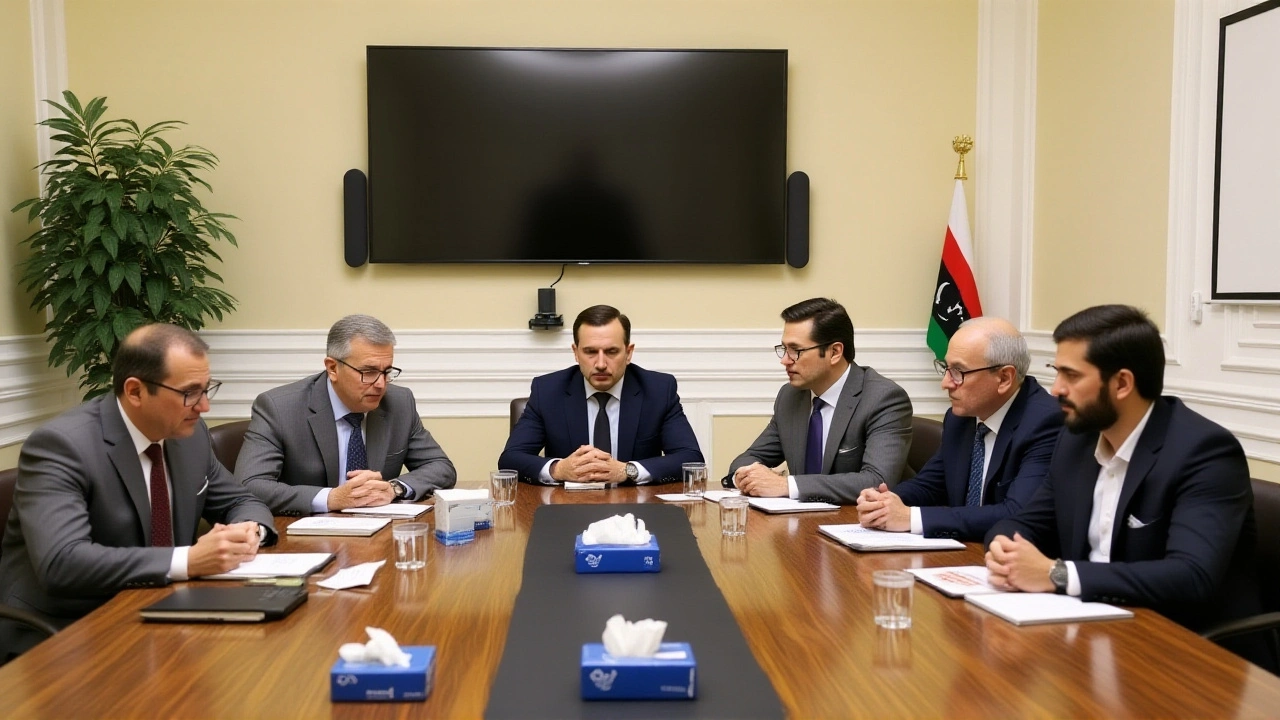
Libya’s Government of National Unity, led by Minister Imran Al-Qayeb, is deploying blockchain to authenticate university certificates, combating decades of credential fraud and rebuilding global academic trust amid post-2011 instability.
Education