
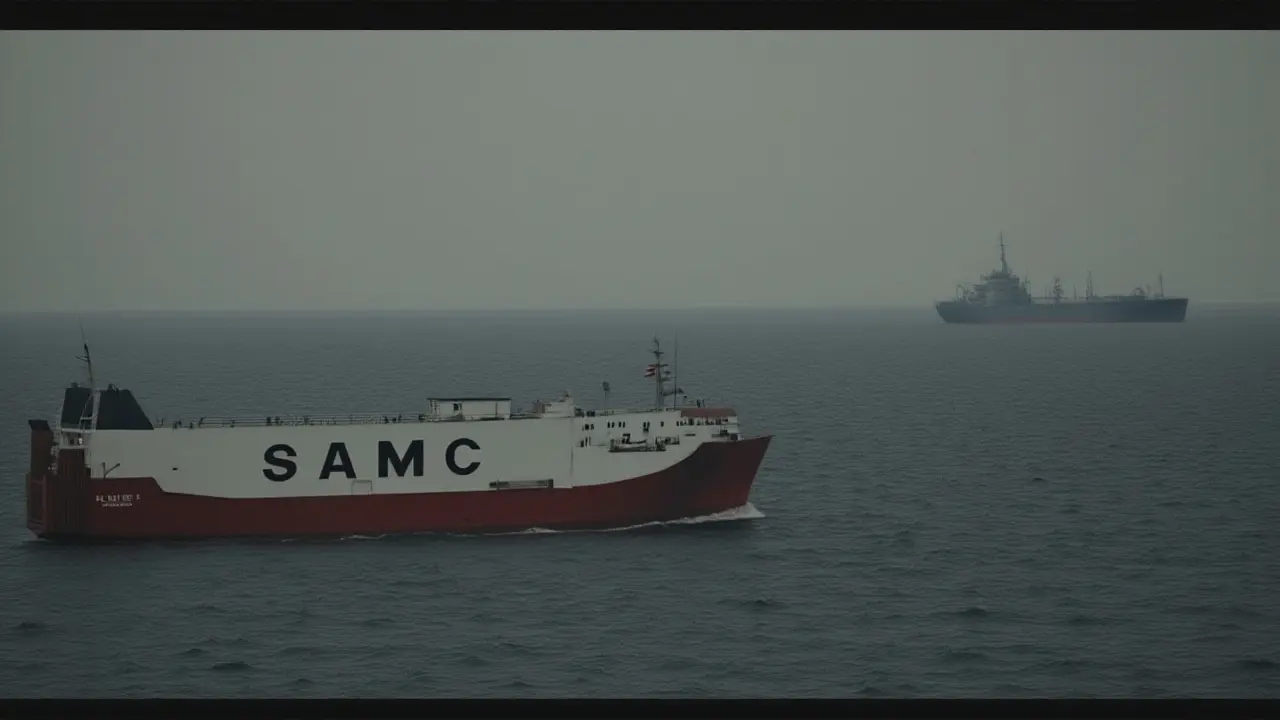
The Islamic Revolutionary Guard Corps (IRGC) has effectively seized control of one of the world's most vital maritime arteries, implementing a formalized "toll booth" system in the Strait of Hormuz since mid-March 2026. This strategic move has crippled normal shipping patterns, forcing nearly 90 percent of typical traffic to a halt and sending global oil prices climbing. By restricting passage to only those vessels that undergo rigorous Iranian vetting, Tehran is now treating this international waterway as a private gated community.
Here's the thing: this isn't just a minor bureaucratic delay. It's a selective blockade that's fundamentally altering how global energy moves. Since March 13, data from Lloyd's List Intelligence shows only 26 vessels have successfully navigated the strait using the new pre-approved routes. Even more jarring? Not a single ship has used the "normal" transit route since March 15. For a waterway that typically handles about one-fifth of the planet's oil and gas supplies, a 90 percent drop in traffic is a systemic shock to the global economy.
The Mechanics of the Iranian 'Toll'
Getting through the strait now requires a level of paperwork that would make a tax auditor blush. Vessel operators can't just sail through; they must first contact IRGC-linked intermediaries. These middlemen demand a full dossier: the ship's International Maritime Organization (IMO) number, a complete ownership chain, a detailed cargo manifest, and a full crew list. (Basically, Iran wants to know exactly who is on the boat and what's in the hold before they even consider letting them in.)
Once the paperwork is submitted, it goes to the IRGC Navy's Hormozgan Provincial Command. They run a three-tier screening process: sanctions checks, cargo alignment—where oil is currently prioritized over everything else—and a "geopolitical vetting" process. If the IRGC is happy, they issue a secret clearance code. Upon arrival, ships are hailed via VHF radio, verified, and then escorted by a patrol boat through a narrow corridor near Larak Island.
But the most controversial part? The price of admission. While not every ship is paying a flat fee, reports from The Independent and Bloomberg indicate a sophisticated payment structure. Some vessels have paid in Chinese yuan or stablecoins (cryptocurrencies pegged to the dollar). One Iranian lawmaker recently claimed the cost for a single journey could reach $2 million. Interestingly, Iran has reportedly implemented a 1-to-5 grading system for nations based on their "friendliness." Those at the top of the list might only pay $1 per barrel of oil on board—a steep sum when you consider a large tanker can carry 2 million barrels.
Diplomatic Smoke and Mirrors
Tehran is playing a double game on the international stage. On one hand, Abbas Araghchi, Foreign Minister of Iran, has been spending his days on the phone with counterparts from China, India, and South Korea, assuring them that "non-hostile vessels" can still pass. Oddly enough, he hasn't mentioned the millions of dollars in tolls in these official diplomatic calls.
The Indian government has pushed back on the payment narrative, stating that Indian ships aren't paying protection money. This suggests a fragmented system where some get through via diplomatic favors while others are forced to pay the "tax." Meanwhile, the composition of traffic has shifted. Now, it's mostly Greek-owned vessels (15%) and Chinese ships (10%) trickling through. According to Windward, a shipping intelligence firm, about 36% of recent transits involved US-sanctioned vessels, which proves this selective blockade is actually helping Iran bypass Western pressure.
The Legal Minefield and Global Reaction
For shipping companies, the dilemma is a nightmare. Paying the IRGC—an entity designated as a Foreign Terrorist Organization by the US—could lead to devastating legal consequences. Matthew Levitt, a sanctions expert, warns that even if a company finds a legal loophole via a general license, they're still exposed to UK and EU penalties. More importantly, they could face US charges for providing "material support" to terrorists. It's a high-stakes gamble: pay the toll and risk prison/fines, or don't pay and lose millions in delayed cargo.
The international community is finally starting to stir, though the response is fractured. Yvette Cooper, Foreign Minister of Britain, is organizing a virtual meeting this Thursday in London with 35 nations, including France and Germany, to discuss restoring freedom of navigation. But here's the twist: the United States is skipping the meeting. Donald Trump has signaled that securing the strait is a problem for other countries to solve, leaving the Europeans and Asians to figure out how to break the IRGC's grip.
Key Facts at a Glance
- Traffic Drop: Maritime volume reduced by approximately 90% since March 2.
- Payment Methods: Chinese yuan and cryptocurrency (stablecoins).
- Toll Rates: Up to $2 million per journey or $1 per barrel for "friendly" nations.
- Oil Price Impact: Prices pushed higher as 20% of global oil/gas supplies are bottlenecked.
- Strategic Shift: Most traffic now detours north of Larak Island.
Frequently Asked Questions
Why is the IRGC implementing this toll system now?
The system allows Iran to monetize its strategic control over the Strait of Hormuz while vetting the geopolitical leanings of visiting nations. By prioritizing oil cargo and "friendly" states, Tehran is using the waterway as a lever for diplomatic and financial gain during a period of regional conflict.
What are the risks for shipping companies that pay the tolls?
Companies risk violating US, UK, and EU sanctions. Specifically, because the IRGC is designated as a Foreign Terrorist Organization, payments could be viewed as "material support" for terrorism, leading to massive fines or criminal prosecution regardless of whether the payment was for "safe passage."
How has this affected global oil prices?
With a 90% reduction in normal traffic in a lane that carries 20% of the world's oil and gas, the market has reacted with volatility. The restricted flow has created a supply crunch, contributing to the rise of crude oil prices to over $108 per barrel.
Is the United States helping to reopen the strait?
Currently, no. President Donald Trump has indicated that the US will not lead the effort to secure the channel, viewing it as a burden for other nations. Consequently, the US is not attending the coalition meetings led by Britain's Foreign Minister Yvette Cooper.
Comments
totaly nuts that the us just lets this happen lol. like we just gonna let some randoms charge 2 mil for a boat ride? absolute joke
The Indian government's denial of paying protection money is a transparent attempt to save face while they navigate the complexities of energy security. It is obvious that bilateral agreements are being made behind closed doors to avoid the optics of fueling a sanctioned entity. Everyone pretending there is a 'fragmented' system is just ignoring the reality of realpolitik.
idk why anyone is suprisingd by this. the global economy is a joke and the us is finally stoping the babysiting of the middle east lol
We are witnessing a paradigm shift in the geopolitical hegemony of maritime chokepoints. The IRGC is effectively leveraging an asymmetrical strategy to disrupt the neoliberal flow of capital and commodities, creating a localized monopoly that forces a recalibration of global supply chain externalities. This is not merely a toll; it is a systemic disruption of the Westphalian notion of international waters, utilizing the Strait's geography as a tool for coercive diplomacy and financial extraction via non-traditional assets like stablecoins.
Why is the same old pattern repeating itself? We just watch these things happen until a total collapse occurs! 🙄 It's a complete failure of leadership and it's driving us all into a wall while the elites just hedge their bets on oil futures. Seriously, how does anyone sleep knowing the global economy is this fragile? It's a goddamn nightmare! 😡
I really hope we can find a peaceful way to resolve this soon. Maybe if all the countries just talked it out without the threats, we could get the shipping moving again. Everyone just wants their goods and energy, so surely there is a middle ground here? ✨
The use of stablecoins and Chinese yuan for these payments is a classic move to bypass the SWIFT system ⚓️. By avoiding the US dollar, Iran effectively neuters the primary weapon of US sanctions. This is why the US is probably sitting out the London meetings-they know the financial plumbing is already leaked 💸🚢.
It's so heartbreaking to think about the crew members caught in the middle of this geopolitical friction 🥺. The cognitive load on these sailors must be immense, knowing that a simple transit could lead to legal repercussions or vessel seizure. We really need to prioritize the humanitarian aspect of these maritime corridors and ensure that the sailors aren't just treated as pawns in a high-stakes game of economic leverage. Sending strength to all the maritime workers out there! ❤️🚢
it is truly a difficult situation for the shipping firms
the legal ambiguity regarding material support is a heavy burden to bear
Yeah, the whole thing feels like a movie. Just wild that we've gone back to basically paying pirates for safe passage in 2026.